
Inside Truly3D LiDAR Viewer: From Mobile Mapping Capture to Usable Insight

The rapid growth of LiDAR technology and mobile mapping systems has transformed how infrastructure is surveyed and managed. Highways, railways, airports, utility corridors, smart cities, and industrial facilities now rely on mobile mapping vehicles equipped with LiDAR scanners, panoramic cameras, GNSS receivers, and inertial measurement units (IMUs) to capture highly accurate geospatial data at scale. Truly3D LiDAR Viewer was built to solve the next problem: turning that raw capture into something teams can actually use.
Capturing billions of LiDAR points is only the beginning. Without the right software to process, visualize, classify, and interpret that information, even the most precise point cloud becomes an enormous, hard-to-navigate dataset. Truly3D LiDAR Viewer bridges that gap, giving engineers, surveyors, GIS professionals, and decision-makers a single environment to visualize, inspect, classify, and manage spatial information — instead of juggling several disconnected tools.
What Is Truly3D LiDAR Viewer?
Truly3D LiDAR Viewer is an advanced visualization and analysis platform built specifically for mobile mapping datasets. It lets organizations view, navigate, analyze, and collaborate on large-scale LiDAR point clouds while integrating high-resolution panoramic imagery in one workspace.
Designed for infrastructure applications, the platform simplifies complex geospatial workflows and helps teams convert raw survey data into decisions. Unlike generic point cloud viewers, Truly3D is purpose-built for corridor-scale mapping — making it a fit for transportation networks, utilities, telecommunications, municipalities, airports, and industrial asset management.
Why a Purpose-Built LiDAR Viewer Matters
Most general-purpose point cloud viewers can technically open LiDAR files, but they weren't designed for the scale of modern mobile mapping projects. Infrastructure surveys routinely involve:
Managing all of this across several independent tools adds unnecessary complexity. Teams typically move data between separate applications for processing, visualization, classification, asset inspection, and reporting — and each handoff adds project time and creates room for inconsistencies. Truly3D removes those inefficiencies with one integrated environment for the full workflow.
Common Challenges with Traditional Point Cloud Software
Generic point cloud tools tend to struggle with infrastructure-scale projects because they weren't built for corridor mapping in the first place. The most common pain points include:
From Mobile Mapping Capture to Actionable Insight
Mobile Data Capture
The workflow starts with a mobile mapping vehicle equipped with a LiDAR scanner, a 72 MP panoramic camera, a GNSS receiver, an IMU, and a distance measuring instrument. As the vehicle travels, it simultaneously records dense point clouds, high-resolution imagery, position, and orientation — allowing large infrastructure corridors to be surveyed quickly with minimal disruption.
Data Processing
After acquisition, the collected sensor data is processed into a unified geospatial dataset. This stage includes point cloud registration, sensor calibration, trajectory correction, georeferencing, noise removal, and image synchronization. The result is a highly accurate digital representation of the surveyed environment.
Visualization in Truly3D LiDAR Viewer
The processed dataset is imported directly into Truly3D LiDAR Viewer. From there, users can navigate through corridors, zoom into specific infrastructure assets, switch viewpoints, explore panoramic imagery, and inspect point cloud geometry in detail. Because the visualization is synchronized, every geometric feature can be viewed alongside its corresponding photographic reference — no separate lookup required.
AI-Based Point Cloud Classification
One of Truly3D's core strengths is AI-assisted classification. The software identifies and organizes infrastructure features such as utility poles, power conductors, vegetation, buildings, road furniture, signage, guardrails, and telecom infrastructure. Instead of manually reviewing every point, users can focus on validating AI-generated classifications — a shift that meaningfully improves productivity on large-scale projects.
The Future of Intelligent Infrastructure Mapping
As LiDAR sensors get faster and mobile mapping systems capture ever-larger datasets, the software managing that data has to keep pace. Organizations are increasingly looking for platforms that combine high-performance visualization, AI-driven classification, synchronized imagery, and collaborative access in one place — rather than stitching together point solutions. Truly3D LiDAR Viewer is positioned to grow with these requirements, helping teams turn complex spatial datasets into operational insight as project scale increases.
Benefits of Truly3D LiDAR Viewer
Mobile Data Capture
Organizations adopting Truly3D LiDAR Viewer report measurable operational gains:
Frequently Asked Questions (FAQ)
Conclusion
Capturing LiDAR data is no longer the hardest part of infrastructure surveying — the real value lies in how effectively that data is processed, visualized, analyzed, and turned into decisions. Truly3D LiDAR Viewer simplifies that journey by combining mobile mapping visualization, synchronized panoramic imagery, AI-assisted point cloud classification, and asset validation in a single platform.
For organizations responsible for highways, utilities, telecommunications, airports, municipalities, and other infrastructure networks, Truly3D helps convert massive geospatial datasets into practical intelligence — supporting faster reviews, improved collaboration, and more informed decision-making.
For more information on our products and services, Contact Us today. Else, email “info@lidarsolutions.com and our executives will get in touch with you shortly.
Request Call Back
Related Blogs
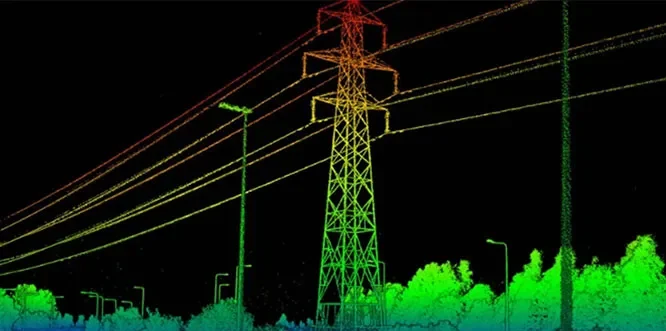
How Telecom Operators Use LiDAR for Pole and Conductor Inspection
How Telecom Operators Use LiDAR for Pole and Conductor Inspection
Read More
Mobile Mapping vs. Handheld LiDAR — Which One Fits Your Survey?
In today's fast-paced infrastructure and geospatial industry, accuracy and efficiency...
Read More